Institutional & Not-for-Profit

    Some commercial practices are unavoidable. It doesn't have to look like Sales.

    Build commercial discipline without compromising the mission.

    The industries we know

    International Organisations

    • European institutions
    • International NGOs
    • Foundations & philanthropy
    • Trade & industry bodies

    Nonprofits have invested for two decades in the quality of what they deliver: monitoring and evaluation, safeguarding, governance, financial control. Donors and governments asked for it. The commercial side received less systematic attention: fundraising, institutional partnerships, grants, earned income and brand.

    Our reading of the research is that the sector has adopted many commercial tools. It has been slower to build the operating model around them: positioning, relationship management, pipeline discipline and measurement.

    Commercial Insights from the sector

    01/07

    Organisations got better at delivering. Winning support got less attention.

    From the 1990s, nonprofits invested in doing their work well and proving it: programme design, monitoring and evaluation, safeguarding, financial control and governance. Donors and governments asked for it. Finding and growing support received less systematic investment.

    Research on the “overhead myth” explains part of why. Funders often judge organisations by how little they spend outside direct programmes. So organisations hold back from investing in data, skilled staff and relationship management, and stay weaker for it. This is called the starvation cycle. The OECD makes the same point from the funder side. Project-only funding can weaken the organisations it relies on, so it argues for core, unrestricted support.

    Why it matters: the capabilities that bring in support are treated as a cost to cut, not as part of the mission. This often created a structuring deficit

    Colleagues gathered around a table of blueprints in a bright studio: a man with dreadlocks and glasses on the left, a woman in a white shirt in the centre, a man in a mustard sweater beyond them, hands and rolled plans across the table, a tall window lighting the room from the left

    Tools are in place. Institutions do not yet have the systems around them.

    A CRM is software that records who your contacts are and what has happened with each. Many organisations now have one. In Blackbaud’s 2024 survey of more than 1,500 professionals in Canada, the UK and Australia/New Zealand, average self-rated digital maturity (on a 1 to 10 scale) fell in each region. Respondents named better data management as the area of greatest value.

    Organisations with more integrated technology were more likely to report revenue growth. A CRM stores contacts. It does not create a process.

    AI adoption rose from 12% to 55% of surveyed nonprofits in a year. Relationships here involve vulnerability and sensitive data, so governance matters.

    Why it matters: software does not build a process. Someone has to decide how it is used, by whom and for what. A role comparable to a Head of Sales.

    An open silver laptop on a wooden desk, with a translucent white graphic of a cloud-connected network of person and cloud icons linked by lines hovering over the screen; a softly blurred window and a peach coffee cup sit behind

    Organisations are changing channels faster than they are building a plan.

    In Salesforce’s 2025 survey of 1,229 nonprofits, 85% had changed their fundraising strategy and 53% had made three or more changes. The most common move was more investment in fundraising, marketing and communications. A separate vendor survey found 43% planning to raise in-person event budgets, alongside spending on online giving, marketing automation and CRM.

    The pattern is more ways to reach supporters. What is rarely visible is one plan for the journey: awareness, engagement, commitment, renewal and advocacy.

    Why it matters: a channel is a way to reach people. A plan decides who to reach, with what message, and what happens after the first gift. More stable, predictable income plans - as is common in for-profit organisations.

    An evening banquet hall: a long table dressed with wine glasses, plates and floral accents in the foreground, a tall ribbed glass hurricane lamp glowing with a candle at its centre, rows of similar tables and violet uplighting dissolving into soft bokeh behind

    Campaigns raise money. Systems build relationships.

    Fundraising often runs as a series of separate pushes: an appeal, a grant deadline, a gala. A system connects the steps: whom you want to reach, what you offer them, how you win their support, how you thank and update them, how you renew the relationship and how you measure results.

    The 2025 US figures show the difference. Giving grew 5%, while the number of donors fell 3.6%. Donor retention was 43.3%, which means fewer than half of donors gave again. A campaign or an event can succeed financially and leave no future supporters behind.

    Why it matters: rising totals can hide a shrinking base of supporters. Only a system makes parameters visible. A commercial engine and dashboards offer a capacity to monitor them.

    A cluster of interlocking isometric paper cubes in bright red, orange, yellow, green, cyan, purple and magenta, each face outlined in black, arranged as a tumbling-blocks optical illusion on a solid black background

    The people who know the impact and the people who hold the relationships rarely work together.

    In many organisations, programme teams own the knowledge of impact. Fundraising and partnership teams own the relationships. Evidence reaches the funder late, and funders receive reports instead of conversation.

    This matters because each audience weighs value differently. A donor looks for connection and evidence of impact. A government funder looks at outcomes, compliance and cost. A beneficiary looks at access, dignity and relevance.

    A strong proposition is written together: the problem, the intervention, the evidence, what remains uncertain, and the invitation to take part.

    Why it matters: funders and partners decide on what they understand. When the two teams do not share what they know, the case for support is weaker than the work deserves.

    A 3D puzzle cube with twisted layers, its facelets covered in colourful pop-art patterns and stylised eye graphics in yellow, blue, magenta, teal and purple, floating against a plain slate-blue background

    Few ways to tell what is working.

    The sector tracks how much it raises, how many donors give again, how people respond online and how events perform. It also leans on one ratio: the share of spending that goes to fundraising. That ratio says little about how well fundraising works.

    Few shared measures exist for the questions a commercial team asks: what it costs to find a promising funder, how many proposals are won, how likely a funder is to renew, how healthy the list of prospects is.

    Data Orchard’s study of 1,039 organisations found progress in data culture and in how data is used. The gap is turning data into commercial decisions.

    Why it matters: leaders can feel that fundraising is hard without being able to say where it breaks. Precisely what commercial engines measure and track.

    White painted draft-scale numbers running down a dark ship hull to a mossy waterline, with green water below

    A brand is more than a logo.

    Researchers Kylander and Stone interviewed 73 people across 41 nonprofits. They found that brand affects an organisation’s impact, how well its people pull together, its capacity, and how much outsiders trust it. They proposed four ideas to guide a nonprofit brand: integrity, democracy, ethics and affinity, meaning a sense of connection.

    Each audience asks a different question. Donors ask whether they can trust you. Funders ask whether the intervention is credible. Beneficiaries ask whether it is for people like them. When the promise exceeds the experience, the brand becomes a reputational risk.

    Why it matters: a brand grounded in real delivery helps every conversation with a funder, partner or supporter start from a better place. Commercial motions help tell these stories consistently.

    A white square picture frame floating on a pink background, with two soft grey clouds: one drifting past its top-left corner, one resting below it

    Business-like tools or a business-like identity?

    If you hesitate to bring commercial practices into your organisation, you have good reasons. The research supports your caution. It does not support refusing everything, either. The question is not whether to adopt business tools, but which ones, for what purpose and how.

    Your hesitation is justified

    It protects something real. Researchers describe the same line many leaders feel between using business tools and becoming a business:

    • Eikenberry and Kluver (2004) warn that marketization can shift relationships from citizens to consumers, from members to donors, from beneficiaries to clients, and from solidarity to exchange.¹
    • Hall (2016) describes the conflict between an organisation’s core values and its business-like concerns. The same practice can read differently under another name. “Lead conversion” feels different from “supporter engagement”.²

    So when staff push back, they are often defending what the organisation stands for.

    The risks are documented

    • In a 2025 study across countries, about one in five nonprofit executives reported creaming: favouring easier-to-serve clients over people with complex needs. It was associated with resource competition and commercial ventures.³
    • A 2024 meta-analysis of 295 effects from 25 studies found a small crowding-out effect. Commercial revenue can reduce donations. The size varies by context.⁴
    • Marketization, through output-based control, resource competition and business-like hiring, was associated with weaker advocacy.⁵

    But the research does not support rejecting the tools

    “Business-like” is not one thing. Dart (2004) shows it covers five different things: rhetoric, organisation, management, revenue generation and relationships with stakeholders.⁶ Adopting one does not mean adopting the others. The studies above measure marketization: commercial income and competition for resources. They do not test a CRM or an account plan on its own.

    One of the article’s most useful distinctions is between:

    • Business-like means: management practices, structures, procedures, and language
    • Business-like ends: goals that prioritize revenue, economic value, market growth, or financial sustainability

    A nonprofit may use managerial tools without changing its fundamental social mission. Conversely, it may retain nonprofit language while shifting its actual goals toward commercial outcomes.

    The risk therefore depends on how practices arrive. Maier and colleagues (2016) show that business-like practices enter through funder pressure, imitation, professional norms and the search for legitimacy.⁷ When practices arrive as conditions, staff can reasonably ask who chose them and which values came with them.

    The outcomes are not fixed. The same review finds that commercialisation does not always produce mission drift. Diversified funding can protect a mission, and commercial activity can support it.⁷ A 2025 review finds that professional management can strengthen resilience, service delivery, advocacy and community building when combined with participatory structures.⁸ The effects depend on governance, purpose, power, funding structure, culture and how practices are adapted.

    So the question is how

    Standing still has its own cost. Good programmes do not fund themselves. Without commercial capability, an organisation relies on a few funders and has less freedom to refuse money that distorts its mission.

    The research therefore points to a middle path: adopt the method, and keep the objective and the values under your own control. The next question is where the line falls.

    The distinction that matters: adopt the method, question the objective

    Adopt

    • Audience understanding
    • Relationship mapping
    • CRM discipline
    • Pipeline management
    • Account planning
    • Proposition design
    • Retention analysis
    • Forecasting
    • Structured stewardship
    • Data governance

    Adapt

    • Sales funnels
    • Lead scoring
    • Conversion rates
    • Lifetime value
    • Cross-selling
    • Customer success
    • Incentives
    • Automation
    • Personalisation

    A beneficiary is not necessarily a customer. A donor is not necessarily a buyer.

    Reject

    • Maximising conversion without informed consent
    • Treating beneficiaries as targets
    • Equating revenue with impact
    • Manipulative urgency
    • Revenue-only incentives
    • Growth that weakens local accountability

    ¹ Eikenberry, A. and Kluver, J. (2004), “The Marketization of the Nonprofit Sector: Civil Society at Risk?”, Public Administration Review https://digitalcommons.unomaha.edu/pubadfacpub/34/

    ² Hall (2016), “Managing identity conflicts in organizations” https://eprints.lse.ac.uk/62300/1/Hall_Managing%20identity%20conflicts_2016.pdf

    ³ Suykens, Hvenmark, Hung and Verschuere (2025), “More Easy to Serve Inc.” https://journals.sagepub.com/doi/abs/10.1177/08997640251343052

    ⁴ “Commercialization and nonprofit donations: A meta-analytic review” (2024) https://law-journals-books.vlex.com/vid/commercialization-and-nonprofit-donations-1049453160

    ⁵ “Trading Voice for Viability? The Impact of Marketization on Nonprofit Advocacy”, Public Administration Review https://onlinelibrary.wiley.com/doi/abs/10.1111/puar.13929

    ⁶ Dart, R., “Being ‘business-like’ in a nonprofit organization”

    ⁷ Maier, Meyer and Steinbereithner (2016), “Nonprofit Organizations Becoming Business-Like” https://research.wu.ac.at/ws/files/19823903/Nonprofit_Organizations_Becoming_Business.pdf

    ⁸ “Breaking Good? Managerial Practices in Nonprofits” (2025) https://ouci.dntb.gov.ua/en/works/9jdMeWRO/

    Usual signs that this may apply to you

    You do not need to recognise all of these. Several is enough to suggest the issue is structural, not individual.

    • The vocabulary is the first casualty. “Supporter engagement” is welcome. “Lead”, “pipeline” and “conversion” are avoided or mocked. The practice is the same. The word decides whether it is accepted
    • Commercial work is craft. It is manual, ad hoc and loosely tracked. Nobody has one view of which opportunities are live, who is committed and where a relationship stands
    • Tools are adopted, habits are not. A CRM exists. It works as an address book. Planning, review and next steps happen elsewhere or not at all
    • The commercial function has less standing than programmes. Fundraising and partnerships are respected as necessary. They are rarely treated as a profession equal to programme leadership, finance or operations. The people doing the work feel it
    • Programme and fundraising teams talk past each other. Programme teams hold the impact knowledge. Fundraisers hold the relationships. Evidence reaches the proposition late, and funders receive reports and not engagement
    • A good idea is rejected as a package. Suggest qualifying opportunities or tracking a pipeline and the answer is “we are not a business”. The debate is about identity, and the method is never examined
    • Branding is strong, and nothing commercial sits underneath. Messaging is sharp. The commercial motion behind it is reactive

    Without changing the mission, how do you bring in a little more commercial discipline, tighten the sails and move faster?

    At the heart of the issue

    Look more closely and you might start noticing something else.

    What is missing is not courage, and it is not comfort with asking. It is a clearer picture of what is being rejected and what is needed.

    The caricature of sales deserves to stay where it is: pushy, manipulative, forceful. But the posture underneath real relationship-based commercial practice is different. It is helping, supporting, finding genuine synergies and scaling impact. It is close to how your best people already work. It just does not wear a name they recognise.

    The rejection is a protection. Credibility with donors, partners and your own team rests on being unmistakably mission-first. Keeping distance from anything that looks like selling defends what makes people trust the organisation. The instinct is right. It is aimed at a caricature, and not at the practice of building the relationship that turns a prospect into a partner.

    Part of the fear is also justified. The risks of creaming, crowding out and weakened advocacy are documented. So the answer is not “get over it”. It is to adopt the method and keep the boundaries explicit.

    Why it persists

    • Hiring and promotion follow mission expertise. Even people who could do this well were never selected or developed for it
    • The aggressive ask becomes the template. The rare pushy approach from another organisation defines what “business development” means. It confirms the caricature
    • Speaking up carries risk. Sounding commercially minded can read as drifting from the mission. Most people who sense the gap stay quiet
    • Practices arrive as conditions. They come from funders, not from a choice the team made. The infrastructure to support them is rarely funded

    A workshop on confident asking addresses none of these. They compound until someone deals with the identity question directly, not only the skills gap above it.

    What could change

    Once the focus moves from refusing the caricature to adopting what is useful underneath it, four things might change.

    Relationships become visible. Stakeholder networks are no longer tracked by memory and instinct. You see who is engaged, who is drifting and where the real opportunities sit.

    Planning rests on evidence. Trajectories become forecastable, not hoped for. Renewals are planned, and less depends on a crystal ball.

    Courtship gets shorter. Clear value propositions and better discovery shorten the months of waiting that run on goodwill alone.

    Freedom to refuse increases. More diversified and flexible income lets you say no to money that would distort the mission. Integrity measures sit next to revenue on the dashboard: complaints, restricted share of funding, advocacy independence and beneficiary dignity.

    The net effect is an organisation that acts with more precision in the world of its partners and funders, without becoming something it is not.

    Test this before you believe it. Take your last ten major funder or partner relationships. Compare renewal rate and time to commitment for those with a named owner and a stewardship plan against those without. If there is no difference, the case is weaker than we claim.

    My own journey

    About twenty years ago, I believed Sales was a dirty word too. Everything I knew about it then was pushing me away from it — the caricature, not the practice. What changed wasn't someone talking me out of it. It was getting the chance to actually look closely enough to see past where most of that stigma really comes from — Hollywood's version of it, not any serious business reference. Once I looked, what I found wasn't what I expected. The useful version looked almost nothing like what I'd been avoiding.

    That's part of why Not-for-Profit matters to me specifically as a sector. My own engineering training was oriented toward international development work — a world where "impact" and "money" get treated as separate categories long before anyone ever sets foot in commercial practice. I understand the instinct to keep them apart. I also watched, in my own case, how much more got done once I stopped.

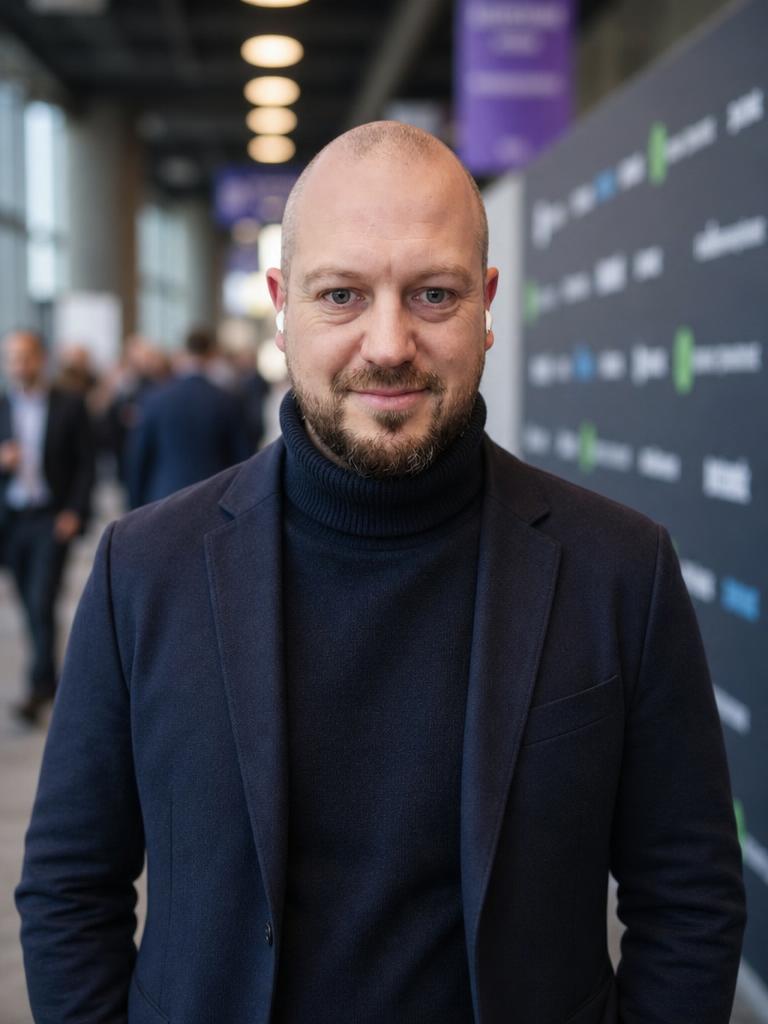
    Julien Lepetit

    Julien Lepetit at a sector conference

    Our approach

    We are hands-on, and we measure our work by what changes in how your organisation builds relationships and mobilises support.

    We do not apply a one-size-fits-all programme. A community organisation, an international humanitarian NGO, a foundation and an advocacy network face different conditions. We start from your mission, your culture and how relationships develop today. Fundraising, grants, institutional and corporate partnerships and earned income all sit within this work.

    We start with values, not tools. Engagements usually follow this path:

    • Draw the boundaries first. Together, we define what you will not do: mislead, pressure, exploit vulnerability, hide uncertainty, trade away mission integrity. Staff know the limits before any tool arrives
    • Translate before you train. We build a shared language, so “qualification” means exploring alignment and not screening for wealth, and “account management” means stewardship of a partnership
    • Look at what really happens. A short Audit compares how relationships are managed today with how the organisation believes they are (Audit)
    • Build the conversations. Mission staff learn to engage funders and partners without a posture that feels false: listening, questioning and making sense of the other side’s priorities (Learning & Development)
    • Adopt the tools that help, and adapt them. Relationship mapping, pipeline and account planning, stewardship and renewal planning, chosen with your team (SalesOps)
    • Treat avoidance as culture where it is cultural. Where it affects the whole organisation, we address it as an organisation-wide shift and not as a training day (Sales Transformation)

    We bring experience of commercial practice across foundations, international organisations and institutions. We bring the methods behind complex B2B selling, including Smarter Selling and The Framemaking Sale, and the conversational skills that build trust. We know the instinct to keep impact and money apart, and we know what it protects.

    Last, we stay for implementation. Skills are coached on live opportunities. Habits are reinforced after the workshops end. We judge the result by signs you can see: a shared language used in meetings, a relationship map kept up to date, renewals planned early. Integrity measures hold steady as commercial ones improve. The measure of our work is your organisation’s results, in service of its mission.


    Testimonials

    Verbatim reflections from client representatives who lived the engagement.

    See what this looks like inside your organization.

    The booking calendar can’t show here because scheduling cookies are off. Click the button to pick a time on the Calendly booking page in a new tab, or allow cookies through “Cookie preferences” in the footer to book without leaving this page. You can also email julien@trustfoundry.eu.